What's Actually Trending in Book Cover Design Right Now
Every year, indie authors scramble to figure out what's "in" for book cover design. And every year, the trend articles are outdated within months. That doesn't mean trends are useless. It means you need to understand what's driving them, not just what they look like on the surface. So let's talk about what's genuinely working in 2026 and, more importantly, why chasing trends is less useful than understanding the system behind them.
Trend 1: Geometric and Abstract Patterns
Geometric covers have moved from literary fiction into mainstream genres. Think tessellated shapes, overlapping circles, angular compositions, and pattern-based designs that create visual interest without relying on representational imagery. This trend works especially well for literary fiction, upmarket women's fiction, and contemporary non-fiction.
Why it's working: geometric designs stand out in Amazon's thumbnail grid precisely because most covers are still photorealistic or illustrated. A bold geometric cover creates visual contrast against everything around it. It also ages well. A geometric pattern doesn't look dated the way a specific stock photo aesthetic does.
Trend 2: Painterly and Handcrafted Styles
There's a strong counter-trend happening in response to AI. Readers and designers are gravitating toward covers that look deliberately handmade. Watercolor textures, visible brushstrokes, hand-lettered typography, ink illustrations. The aesthetic says "a human made this" whether or not a human actually did.
This is particularly strong in romance, cozy mystery, and middle grade fiction. The irony is that AI tools like Nano Banana can produce convincing painterly and watercolor effects when prompted correctly. The method matters more than the tool. If you can describe the artistic style you want with specificity, AI can deliver it.
Trend 3: Bold Minimalism
Less is winning. Covers with a single strong image element, oversized typography, and generous negative space are outperforming busy, cluttered designs. This trend dominates thriller, suspense, business non-fiction, and memoir. The approach works at thumbnail size because there's nothing to get lost. One image. One title. Maximum contrast.
The challenge for indie authors is that minimalism requires confidence. It's tempting to add more elements to fill the space. But the bestseller data is clear: in genres where bold minimalism fits, the cleanest covers get the most clicks. Look at the top 10 thrillers on Amazon right now and count how many use a single object, a single color accent, and giant text. The pattern is unmistakable.
Trend 4: Vibrant, Saturated Color
The muted, desaturated palette that dominated 2023-2024 is fading. Covers in 2026 are pushing toward rich, saturated color. Deep teals, electric oranges, vivid magentas, and bright golds. This shows up across genres, from romance to sci-fi to self-help. Vibrant color pops on screens (where most readers browse) and creates emotional impact at any size.
The practical takeaway: if your cover palette feels washed out or muted, consider a more saturated version. Test both. In many genres, the vibrant version will outperform the muted one in click-through rate because it grabs attention in the crowded Amazon thumbnail grid. Saturated color is also more forgiving across different screen types and brightness settings.
Trend 5: AI-Assisted Design Workflows
This is less of a visual trend and more of an industry shift. In 2026, AI-assisted cover creation has gone mainstream. Professional designers use AI for concept generation and ideation. Indie authors use AI for complete cover creation. The stigma has faded as the quality has improved, especially with models like Google Gemini's Nano Banana that produce genuinely professional output.
The authors getting the best results aren't just typing "book cover for romance novel" into an AI tool. They're using creative direction methods. Genre codes, conceptual prompting, color psychology, and composition principles. The AI is the instrument. The author is the director.
Why Trends Matter Less Than You Think
Here's the honest truth about book cover trends: they change every 12-18 months. The geometric trend will fade. Minimalism will evolve. Color palettes will shift. If your entire cover strategy is "follow the current trend," you'll be redesigning every year.
What doesn't change is the underlying system. Genre codes. Visual hierarchy. Thumbnail readability. Color psychology. Compositional balance. These are the fundamentals that make a cover work regardless of what's trending. A cover that nails the genre signals and reads clearly at thumbnail size will outsell a trendy cover that confuses readers about the genre.
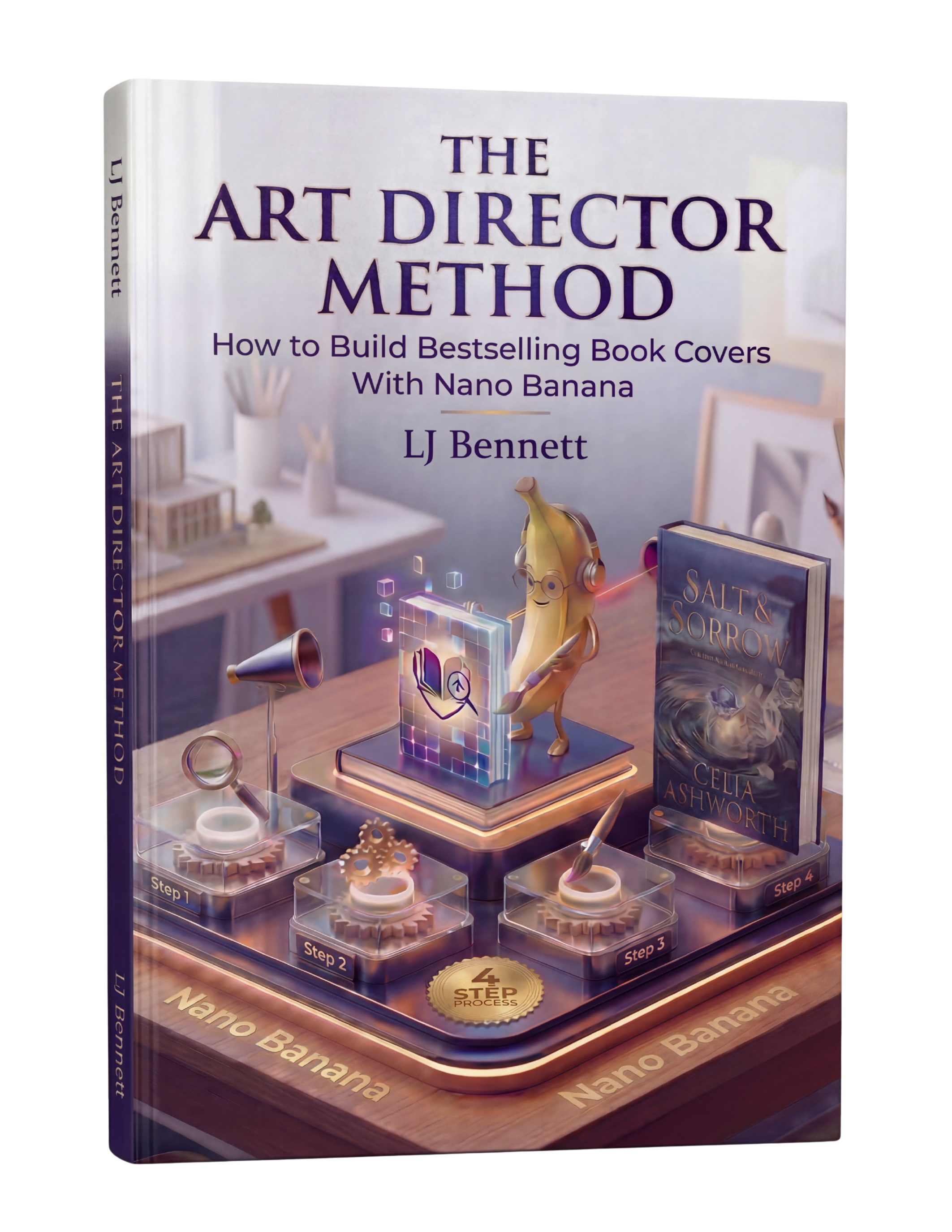
This is what The Art Director Method is built on. The 88-page guide doesn't teach you to copy the current trend. It teaches you to read genre visual codes, understand why certain design choices work, and direct AI (specifically Nano Banana) to create covers that match your genre's expectations while still standing out. Trends are the surface. The method is the foundation.
The guide is $19.99 on Payhip and works for every genre, every trend cycle, and every book you'll publish. Because the skill it teaches, creative direction, is permanent. The trends aren't.
This is exactly what The Art Director Method using Nano Banana teaches you to do right.
Turn Nano Banana from a slot machine into your creative partner.
Get the Guide - $19.99Frequently Asked Questions
The top book cover trends in 2026 are geometric and abstract patterns, painterly and handcrafted illustration styles, bold minimalism with oversized typography, vibrant saturated color palettes, and AI-assisted design workflows. These trends vary by genre, with minimalism dominating thrillers and non-fiction while painterly styles trend in romance and cozy mystery.
Be aware of trends but don't chase them. Trends change every 12-18 months. What matters more is understanding your genre's visual codes - the design elements readers expect to see that signal 'this is the kind of book you're looking for.' A cover that nails genre signals will outperform a trendy cover that confuses readers.
AI-assisted cover design is an industry shift, not a passing trend. In 2026, both professional designers and indie authors use AI tools for cover creation. The quality from tools like Google Gemini's Nano Banana matches professional design when paired with proper creative direction. The Art Director Method ($19.99) teaches this creative direction process.
There is no single best-selling style because it depends entirely on genre. Thrillers sell with bold minimalism. Romance sells with painterly warmth or vibrant illustration. Sci-fi sells with geometric abstraction or cinematic realism. The style that sells best is the one that accurately matches your specific subgenre's visual expectations.