Amazon's Current AI Content Policy for KDP
Amazon updated its KDP content guidelines in late 2023 to address AI-generated material. The policy is straightforward, but most authors misread it because they confuse two categories Amazon treats very differently.
AI-generated content is material created entirely by an AI tool with minimal human input. You type a prompt, the AI produces an image, and you use it as-is. Amazon requires you to disclose this during the publishing process.
AI-assisted content is material where AI was used as a tool, but you substantially directed, edited, or created the final output. This includes using AI to generate a base image that you then crop, color-correct, composite with other elements, and add typography to. Amazon does not require disclosure for AI-assisted content.
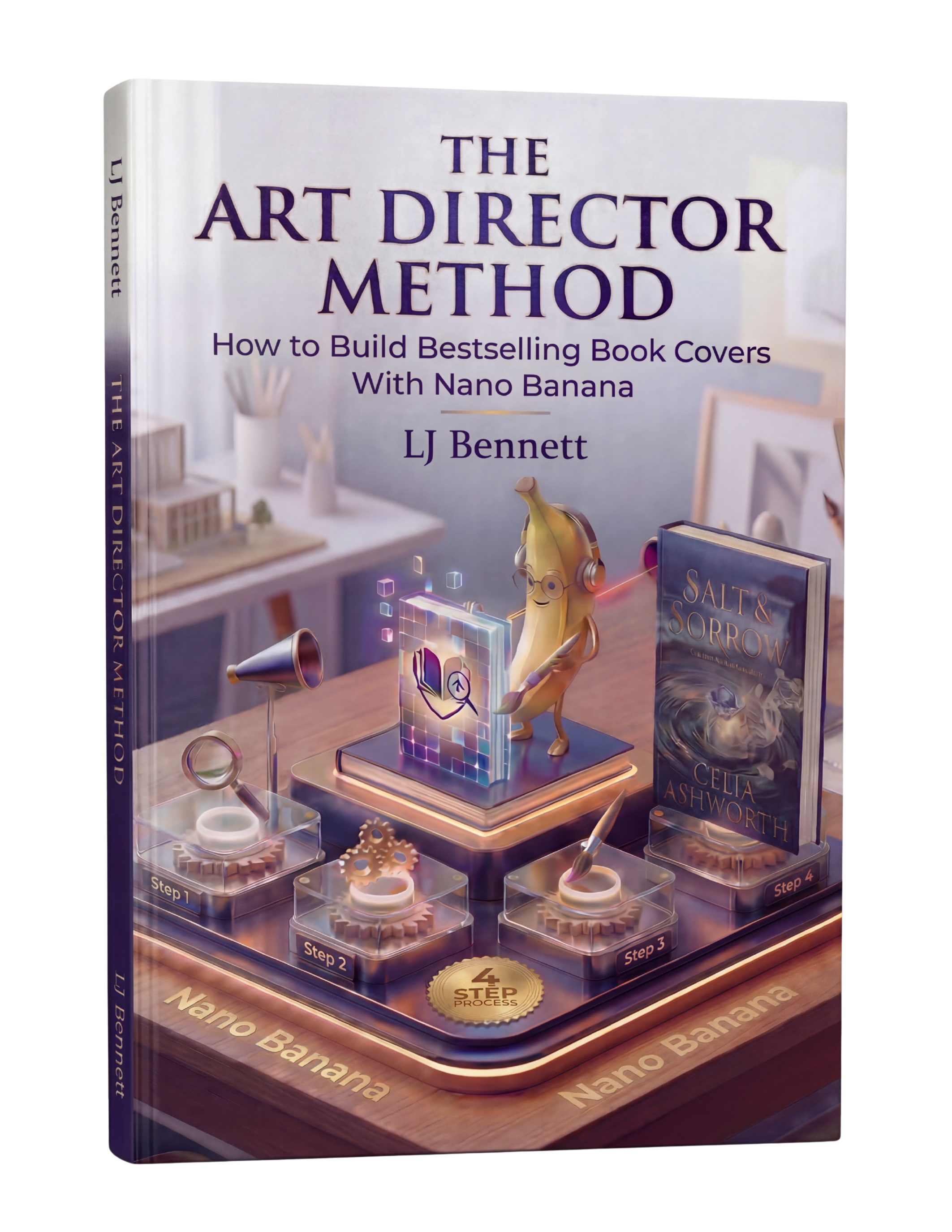
The distinction matters enormously. If you are using a method like The Art Director Method, where you direct the AI with detailed creative briefs, select from multiple generations, edit the output, and add professional typography, your work falls into the AI-assisted category. You are the creative director. The AI is one of your tools.
What You Need to Disclose and Where
During the KDP publishing workflow, you will see a question about AI-generated content. This appears on the content details page before you publish. Here is what to know:
- ● If your cover image was generated by AI and used with little to no modification, select "yes" for AI-generated content.
- ● If you used AI to generate base imagery but then substantially edited, composited, or added original elements (like typography), you can select "no" for AI-generated, since your work is AI-assisted.
- ● The disclosure applies to both text and images. Cover art and interior content are evaluated separately.
- ● There is no public-facing label on your book. The disclosure is between you and Amazon.
When in doubt, disclose. Amazon has never penalized an author for over-disclosing. They have flagged authors for under-disclosing.
What Can Get Your Book Flagged or Removed
Amazon's enforcement is not about whether you used AI. It is about quality, deception, and trademark or copyright infringement. Books get flagged for these reasons:
- 1. Failure to disclose AI-generated content. If Amazon determines your content is AI-generated and you did not disclose it, your book can be removed.
- 2. Mass-produced low-quality content. Amazon cracked down on AI spam in 2023-2024. If your book looks like it was generated in five minutes with no human effort, it draws scrutiny.
- 3. Trademark or copyright infringement. AI can generate images that resemble existing copyrighted characters, logos, or artwork. If your cover includes elements that look like someone else's IP, you are liable.
- 4. Misleading cover art. A cover that misrepresents the book's content (regardless of how it was made) violates KDP guidelines.
Notice what is not on that list: simply using AI to create a high-quality, original book cover. That is perfectly fine.
Copyright Considerations: The US Copyright Office Position
The US Copyright Office has issued guidance making clear that purely AI-generated images, with no human authorship, cannot receive copyright protection. This came from the Zarya of the Dawn case and subsequent rulings.
However, the Copyright Office also acknowledged that works containing both AI-generated and human-authored elements can receive protection for the human-authored portions. This is the critical nuance most people miss.
What does this mean for your book cover? If you:
- ✓ Direct the AI with specific, detailed creative briefs
- ✓ Select and curate from multiple generated options
- ✓ Edit, crop, color-correct, and composite the images
- ✓ Add original typography, layout, and design elements
- ✓ Make creative decisions about the overall composition
Then the arrangement, selection, and original elements you contributed are copyrightable. The more human creative direction involved, the stronger your claim. This is exactly what The Art Director Method teaches: not just generating images, but directing AI as a creative tool.
Kindle vs. Paperback: Any Difference?
Amazon's AI content policy applies equally to both formats. The disclosure checkbox covers your entire publication. Whether you are uploading a front-cover-only JPEG for Kindle or a full wrap PDF for paperback, the same rules apply.
For paperback, keep in mind that your full wrap (front, spine, back) goes through Amazon's automated review. AI-generated images with visual artifacts, distorted text, or obvious AI tells (like extra fingers or garbled lettering) can trigger quality review holds. This is not an AI policy issue. It is a quality issue. Clean, professional covers pass review regardless of how they were made.
Practical Steps to Stay Compliant
- 1. Direct, don't just generate. Use detailed creative briefs. Select from multiple options. Edit the output. This moves you from "AI-generated" to "AI-assisted."
- 2. Always add your own typography. Never let AI generate your title text. Adding professional typography is both a quality move and a copyright move, since the text layout is your original work.
- 3. Disclose when appropriate. If your imagery is substantially AI-generated, check the box. It costs you nothing and protects you from removal.
- 4. Check for IP issues. Review your generated images for anything that resembles existing characters, logos, or copyrighted artwork. AI models can reproduce elements from training data.
- 5. Keep your process documented. Save your prompts, your iterations, and your editing steps. If Amazon ever questions your work, documentation of your creative process is your best defense.
- 6. Quality-check everything. Zoom in. Check for artifacts, weird hands, garbled background text. A clean, professional cover passes review every time.
The Bottom Line
After 30 years in publishing, I have watched every major production shift in book design. Digital typesetting. Stock photography. Print-on-demand. Every single one triggered the same panic: "Will this be allowed? Will it devalue my work?" Every single one became the new standard within a few years.
AI-assisted cover design is no different. Amazon allows it. The Copyright Office has provided a framework for it. The key is doing it well, not just doing it fast. That is the entire philosophy behind The Art Director Method: treating AI as a production tool, not a replacement for creative direction.
This is exactly what The Art Director Method using Nano Banana teaches you to do right.
Turn Nano Banana from a slot machine into your creative partner.
Get the Guide - $19.99Frequently Asked Questions
Yes. Amazon KDP allows AI-generated and AI-assisted book covers for both Kindle ebooks and paperback editions. You must disclose AI-generated content during the publishing process, but AI-assisted content (where you substantially edit or direct the output) does not require disclosure.
AI-generated content is created entirely by AI with minimal human involvement. AI-assisted content uses AI as a tool, but the human substantially directs, curates, and edits the output. Amazon treats these differently for disclosure purposes. If you use AI to generate a base image and then add typography, adjust composition, and make creative decisions, that is AI-assisted.
Amazon can flag or remove books that violate their content guidelines, including failure to disclose AI-generated content. However, using AI for cover art is not against KDP policy. The risk comes from not disclosing when required, or from using AI-generated images that infringe on existing copyrighted or trademarked material.
The US Copyright Office has ruled that purely AI-generated images cannot receive copyright protection. However, if you substantially modify, arrange, or add original elements to the AI output, those human-authored elements can be copyrighted. The more creative direction and editing you apply, the stronger your copyright claim.
Yes. Amazon's AI content policy applies equally to Kindle ebooks and paperback editions. The disclosure checkbox during publishing covers all formats. Your cover image, whether for digital or print, follows the same guidelines.