Cost and Feature Comparison
| Criteria | 99designs | AI + Art Direction |
|---|---|---|
| Cost per cover | $299 - $1,299+ | $49 one-time + tools |
| 5-book series | $1,495 - $6,495+ | $49 one-time + tools |
| Turnaround | 7 - 14 days | Same day |
| Design concepts | 30 - 100+ entries | Unlimited |
| Revisions | Limited rounds | Unlimited |
| Genre expertise | Varies by entrants | You learn it |
| Creative control | Brief + feedback | Total |
What 99designs Does Well
The contest model is genuinely appealing. You write a brief describing your book and what you want the cover to convey. Multiple designers submit concepts. You rate them, give feedback, narrow the field, and pick a winner. It is like having a design team compete for your project.
Multiple perspectives. The biggest advantage of 99designs is seeing 30 to 100+ different interpretations of your brief. Sometimes a designer takes your concept in a direction you never imagined, and it turns out to be exactly right. That serendipity is hard to replicate when you are directing the process yourself.
No upfront risk on direction. Unlike hiring a single designer and hoping they nail it, you see many options before committing. If none of the entries work, most packages include a money-back guarantee.
Professional polish. The designers on 99designs are experienced freelancers. Higher-tier contests attract more skilled professionals, and the final deliverables are print-ready files with proper formatting.
Where 99designs Falls Short
The price is steep for indie authors. At $300 for Bronze and $1,300 for Platinum, 99designs is one of the most expensive cover options available. For an indie author whose book might earn $500-2,000 in its first year, spending $300-1,300 on the cover alone is a significant percentage of potential revenue.
Slow process. Contests run 7 to 10 days minimum. Add revision rounds with your chosen designer and you are looking at 2 to 3 weeks from start to final files. For authors on a release schedule, that delay can push back an entire launch timeline.
Generic results are common. Many contest entries come from designers who have not read your book and do not specialize in your genre. They submit stock-heavy designs that technically match your brief but lack the genre-specific signals that make readers pick up your book. Quantity of entries does not guarantee quality of fit.
Series consistency is a problem. Each contest attracts different designers. Getting books 2 through 5 to visually match book 1 means either finding the same designer again (who may not be available) or running new contests with very specific style references. Either way, maintaining a cohesive series look through the contest model is difficult and expensive.
How AI with Art Direction Compares
The contest model's core promise is "see lots of options, pick the best one." AI delivers the same promise at a fraction of the cost and time. Generate 50 concepts in an afternoon instead of waiting 10 days for 30 entries. Iterate on the best three until you have something that genuinely represents your book.
The method gap. The reason raw AI does not replace 99designs is the same reason it does not replace any professional service: the tool without the thinking produces amateur results. The Art Director Method fills that gap by teaching you the design thinking that professional cover designers use, then applying it to AI generation tools.
Where 99designs still wins. If you truly want zero involvement in the design process and have budget to spend, 99designs handles everything. You write a brief, evaluate entries, and receive final files. The trade-off is cost and time for convenience.
When to Use Which
- 1. Use 99designs for a single, high-budget launch where you want professional concepts without doing any design work yourself. The Gold or Platinum tiers attract better designers and produce stronger results than Bronze.
- 2. Use AI with art direction for series, multiple books per year, tight budgets, or when you want full creative control. The one-time $49 investment in The Art Director Method pays for itself compared to a single Bronze contest.
- 3. Skip Bronze contests. The lowest tier attracts the least experienced designers and frequently produces generic results. If you are going to use 99designs, invest in Gold or higher to get entries worth evaluating.
- 4. Consider the hybrid approach. Use AI to develop your cover concept and visual direction first, then bring that refined vision to a 99designs contest or a 1-to-1 designer. Knowing exactly what you want before hiring produces dramatically better results from any service.
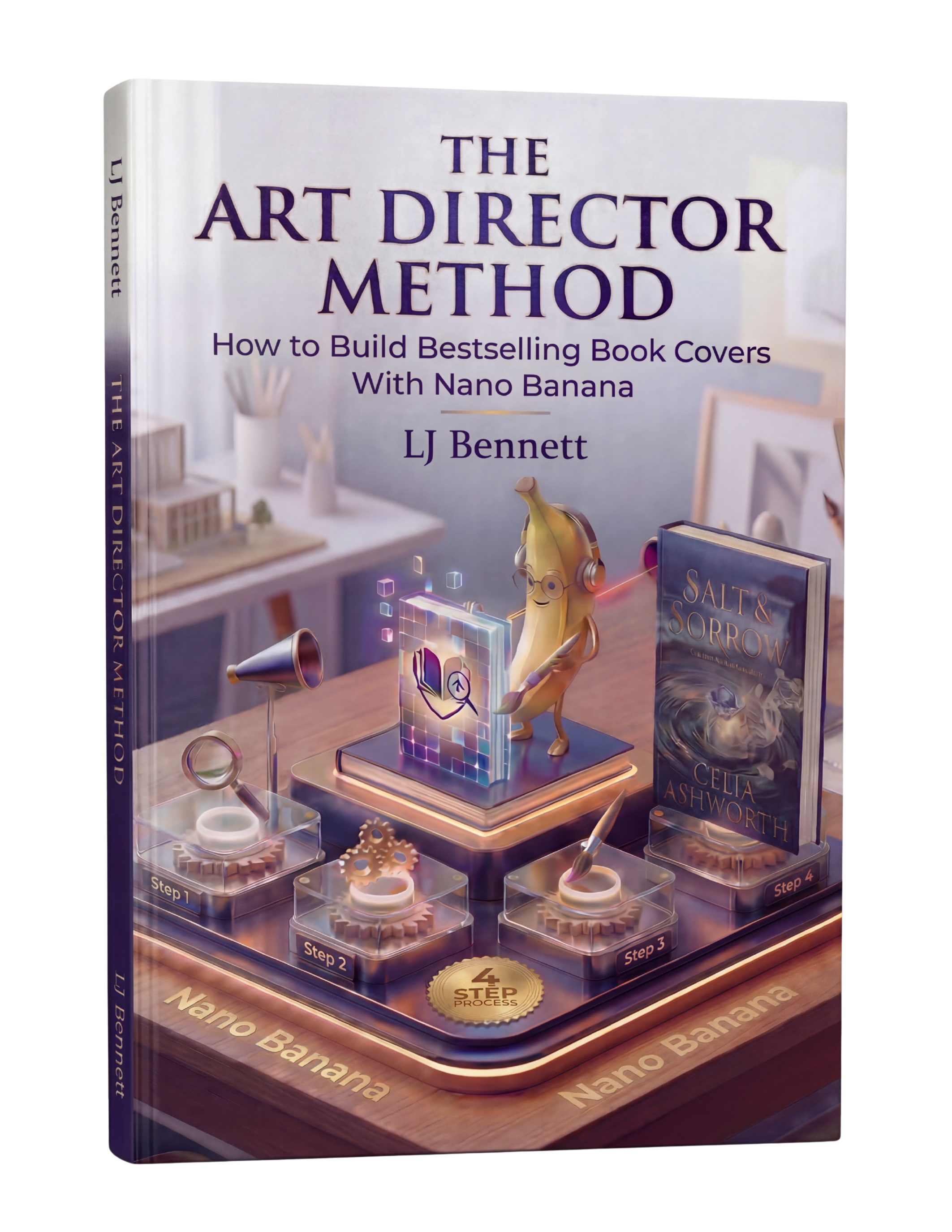
This is exactly what The Art Director Method using Nano Banana teaches you to do right.
Turn Nano Banana from a slot machine into your creative partner.
Get the Guide - $19.99Frequently Asked Questions
99designs book cover contests range from approximately $299 for a Bronze package to $1,299 or more for a Platinum package. The Bronze tier gets you around 30 design concepts from multiple designers. Gold and Platinum tiers attract more experienced designers and include more revision rounds. Additional costs can include the 99designs platform fee and optional upgrades like highlighting your contest.
For a single high-stakes book launch with budget to spare, 99designs can deliver solid results because you see multiple design directions before committing. For series authors or those publishing regularly, the cost-per-cover math makes it impractical. At $300-1,300 per contest, a 5-book series would cost $1,500 to $6,500 in cover design alone. AI with proper art direction achieves comparable quality for a one-time $49 investment.
The main downsides are: high cost ($300-1,300 per contest), slow turnaround (7-10 days minimum for the contest period), generic results from designers unfamiliar with your specific genre, and the reality that many contest entries use stock images you could have found yourself. The contest model also means most participating designers lose and do not get paid, which can affect the quality of entries you receive.
With proper art direction, AI-generated covers can match the quality of mid-tier 99designs results. The best 99designs outcomes come from experienced designers who deeply understand your genre, and that level of specialized knowledge is hard to replicate. However, the average 99designs contest produces results comparable to what a well-directed AI process can achieve, at a fraction of the cost and time.
If you are publishing one book and want to see multiple professional concepts without doing any design work yourself, 99designs is a reasonable choice. If you plan to publish multiple books, want creative control over your covers, or need to keep costs manageable, learning AI cover design with a structured method like The Art Director Method is the better long-term investment. The skills you learn apply to every future book.