Why Your Brief Matters More Than Your Budget
You can hire the most expensive cover designer in the world and still get a cover that doesn't work. If your brief is vague, your cover will be vague. If your brief describes your plot instead of your genre's visual language, the designer will create something that illustrates your story but doesn't sell your book. These are two very different things.
A great brief is the difference between three rounds of revisions and nailing it on the first draft. It saves you money, saves the designer time, and produces a better result. Whether you're working with a human designer or directing AI, the brief is everything.
Element 1: Genre and Subgenre (Non-Negotiable)
This is the foundation. Don't just say "romance." Say "contemporary small-town romance" or "dark mafia romance" or "cozy romantic comedy." Each subgenre has distinct visual codes. Dark romance looks nothing like cozy romance. Military thriller looks nothing like psychological thriller. The more specific you are about your subgenre, the more accurately your designer can hit the right visual target.
If you're not sure how to describe your subgenre, look at where your book would sit on Amazon. What categories would it be in? What books would appear in the "also bought" section? Those are your visual neighbors, and your cover needs to look like it belongs with them.
Element 2: Target Reader Profile
Tell your designer who's buying this book. Age range, gender skew, reading habits. A thriller aimed at 25-35 year old men looks different from a thriller aimed at 45-60 year old women, even if the plot is similar. The visual choices, from color palette to font style to imagery, should appeal to your actual reader.
Element 3: Mood and Tone (Not Plot)
This is where most author briefs go wrong. They describe the plot. "My book is about a woman who discovers her grandmother's diary in an old farmhouse and uncovers a family secret that spans three generations." That's your blurb, not your brief.
Your brief should describe the FEELING. Atmospheric and melancholy. Warm and nostalgic. Tense and claustrophobic. Whimsical and light. The mood dictates the color palette, the lighting, the composition, and the overall energy of the cover. Designers can translate a mood into visuals. They can't translate a plot summary.
Try describing your book's mood in 3-5 keywords. Examples: "eerie, fog, isolation, dread, quiet." Or "sunshine, laughter, small-town, second-chance, warmth." Those keywords give a designer more useful direction than three paragraphs of plot.
Element 4: Comp Title Covers (Show, Don't Tell)
Pull 3-5 covers from published books in your genre that feel right. Not necessarily the same story, but the same visual energy. For each one, write a specific note:
• "I like the dark moody color palette in this one."
• "This typography treatment is exactly the bold, clean style I want."
• "The way the figure is silhouetted against the landscape. That composition."
• "This cover's overall layout with the title placement at the top."
Specific notes on specific covers are 10x more useful than general descriptions. "I want something dark and moody" could mean a thousand things. "I want the color palette from [Book A] with the typography style from [Book B] and the composition approach from [Book C]" gives a designer a clear target.
Element 5: Technical Specs and Requirements
Include the practical details upfront so there are no surprises:
• Ebook dimensions (2560 x 1600 for Amazon, or your preferred specs)
• Print trim size if needed (5x8, 5.5x8.5, 6x9, etc.)
• Series branding requirements (matching style, consistent elements, series title placement)
• Required text (title, subtitle, author name, series name, any endorsement quotes)
• What you DON'T want (this is just as important as what you do want)
The Connection to AI Cover Creation
Here's something most authors don't realize: every single skill in briefing a human designer translates directly to directing AI. Genre analysis. Mood description. Comp title reference. Color and typography preferences. The brief IS the prompt. The vocabulary is the same. The thinking process is identical.
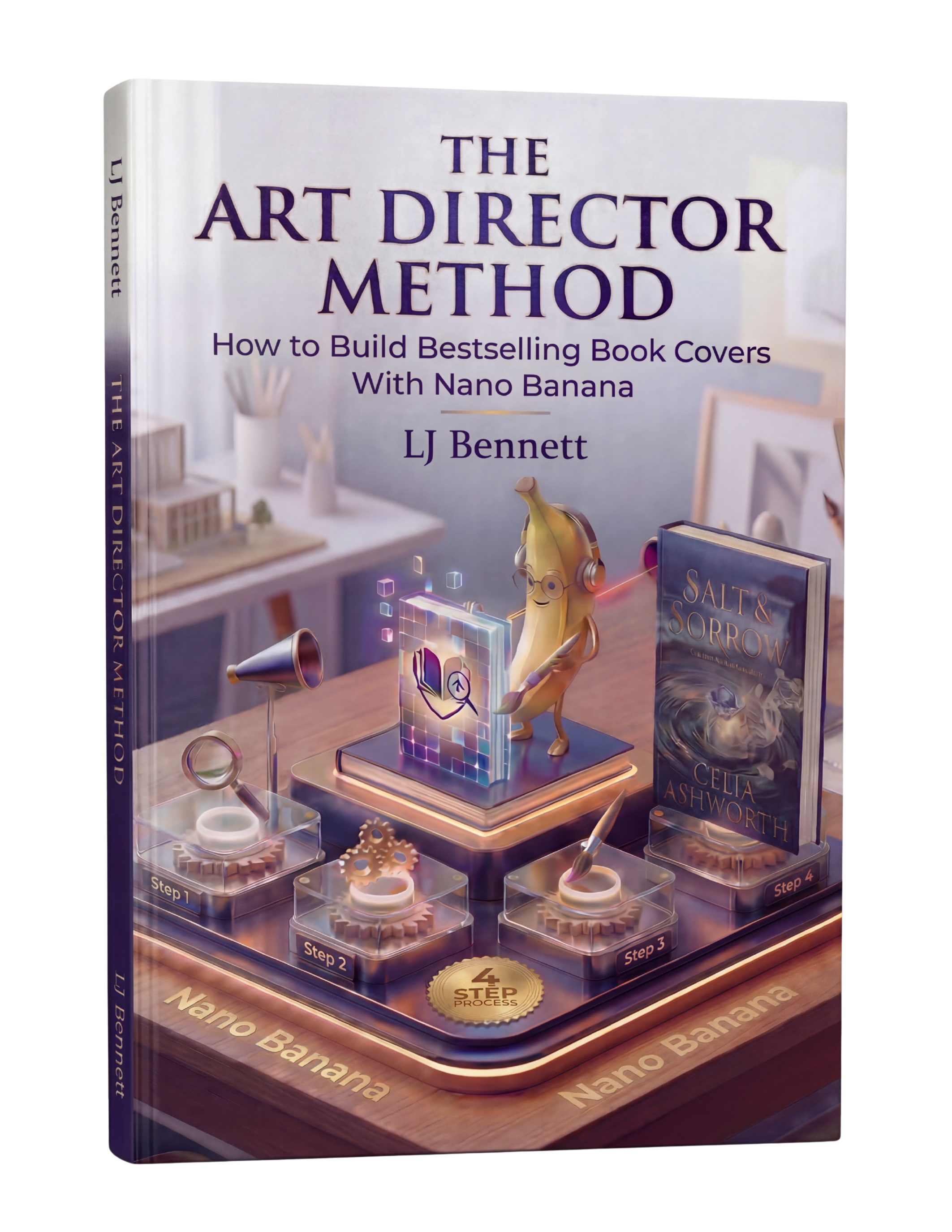
This is exactly what The Art Director Method teaches. The 88-page guide builds your creative direction skills, the same skills you'd use to brief a designer, and shows you how to apply them to AI cover creation using Google Gemini's Nano Banana. You learn genre codes, conceptual prompting, visual language, and composition. If you can write a great designer brief, you can direct AI. And if you learn to direct AI, you'll also become better at briefing human designers if you ever choose to hire one.
The difference is cost and speed. A designer takes the brief and returns drafts in 1-2 weeks for $300-700. AI takes the brief and returns drafts in minutes for free. The creative direction skill is the same. The Art Director Method is $19.99 on Payhip and teaches both the skill and the AI workflow.
This is exactly what The Art Director Method using Nano Banana teaches you to do right.
Turn Nano Banana from a slot machine into your creative partner.
Get the Guide - $19.99Frequently Asked Questions
A complete cover brief includes: genre and subgenre, target reader demographics, 3-5 mood/tone keywords, 3-5 comp title covers with specific notes on what you like, technical specs (dimensions, trim size), required text elements, series branding needs, and a list of what you don't want. Mood descriptions are more useful than plot summaries.
Focus on mood and visual references, not plot. Instead of describing your story, describe the feeling: 'atmospheric, moody, isolated, winter palette.' Then provide 3-5 existing book covers you admire with specific notes like 'I love the typography from this one and the color palette from that one.' Concrete visual references communicate better than abstract descriptions.
Yes. The skills for briefing a human designer (genre analysis, mood description, visual references, composition preferences) translate directly to AI prompting. The Art Director Method ($19.99) teaches these creative direction skills specifically for AI cover creation with Google Gemini's Nano Banana. If you can brief a designer, you can direct AI, and vice versa.
The biggest mistakes are: describing plot instead of mood, not specifying the subgenre precisely enough, providing no visual references, and not looking at what's currently selling in their genre. A brief that says 'dark romance with a tense, dangerous mood, similar to these 3 covers' gives the designer a clear target. A brief that retells the story gives them nothing to design from.